

Training at Higher Intensities to Support Healthy Aging


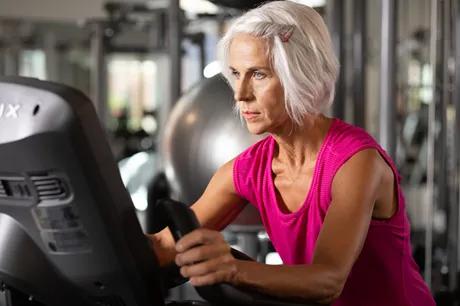
Many adults remain physically active as they age, yet one physical quality often declines faster than muscle mass itself: the ability to generate force quickly.
Power, speed and rapid force production depend on fast-twitch muscle fibers and the high-threshold motor units that control them. Compared to slow-twitch, fast-twitch fibers undergo greater atrophy with age.1 As the ability to generate force quickly declines, so does the ability to recover from a trip, slip or stumble. This is part of why older adults are more prone to falls.
The challenge for fitness professionals is that many common physical activities provide little exposure to the higher-force demands that engage fast-twitch muscle fibers.
The Training Gap
Walking is the most common form of physical activity among adults. It supports cardiovascular and metabolic health and contributes to overall well-being, making it a key part of healthy aging. However, walking involves little acceleration or rapid force production, so it provides limited stimulus for the fast-twitch fibers that support power, balance recovery and quick reactions.2 As a result, a gap can develop between the physical abilities people need as they age and the ones they regularly train. Walking remains important for endurance and mobility, but people also need opportunities to move faster, change speed and generate force more quickly.
Why Sprint Intensity Is Different
Reaching higher intensities with interval training places demands on the body that are rarely encountered during everyday movement. These can be gradually progressed to sprint intensity, short bursts of all-out effort that offer members highly effective time-efficient workouts.3
Whether performed on an indoor cycle, treadmill or elliptical, sprint-intensity efforts require acceleration and rapid force production, qualities that are often undertrained in daily life. This distinction may be particularly relevant for healthy aging because the fast-twitch fibers responsible for rapid, powerful movement are also among the most affected by aging.1,4
What This Means for Fitness Professionals
Healthy aging is often discussed in terms of maintaining muscle mass, mobility and cardiovascular health. Those qualities are important, but they are only part of the picture. The ability to generate force quickly also influences how people move through the world, from climbing stairs and rising from a chair to recovering from a loss of balance.
Many adults remain active as they age, but activity alone does not guarantee that every physical quality is receiving the stimulus needed to support it. This raises an important consideration for fitness professionals. Are programs intentionally developing the physical qualities people are most likely to lose, or are some being left to chance?
The objective is not to turn every exerciser into a sprinter. The objective is to ensure that important physical qualities are not unintentionally neglected. Many programs emphasize duration, distance, calories and heart rate. Fewer intentionally develop speed, responsiveness and power.
This gives fitness professionals a clear opportunity to think beyond participation alone. Speed, power and rapid force production require opportunities to be practiced just as endurance does.
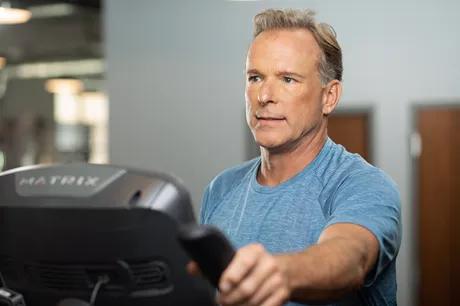
Practical Programming Considerations
- Review cardio offerings and identify whether speed, power and rapid force production are being trained as intentionally as endurance.
- Include appropriately scaled higher-intensity intervals for individuals who can safely perform them.
- Consider cycling, rowing, incline walking or other modalities that allow people to safely increase speed and effort.
- Evaluate success using measures beyond volume and duration. Improvements in speed, responsiveness, confidence and power may also represent meaningful progress.
- Treat power as a trainable physical quality alongside strength, endurance and mobility.
Walking remains an important foundation for healthy aging. The question is whether members are also being exposed to the higher-intensity efforts needed to challenge speed, power and rapid force production. When these qualities are trained with intention, fitness professionals can help members build a broader foundation for healthy aging.

Phil Campbell, MS, MA, FACHE, ACSM-CPT
References
- Miljkovic et al. Aging of skeletal muscle fibers. Ann Rehabil Med 2015; 39(2): 155-62.
- Campbell. Empowering Exercise for Older Adults. Available at: https://world.matrixfitness.com/eng/learning/post/empowering-exercise-for-older-adults
- Molmen et al. Effects of endurance, high-intensity interval and sprint interval training on skeletal muscle mitochondrial content and fibre type composition: A systematic review and meta-analysis. Sports Med 2025; 55: 115-44.
- Nilwik et al. The decline in skeletal muscle mass with aging is mainly attributed to a reduction in type II muscle fiber size. Exp Gerontol 2013; 48: 492-8.

